Reviews

I was seriously ill for a month with flu then pneumonia.  During this time I managed to do some reading but I couldn’t string string together sentences worth a damn so a pile of books for review accumulated.  Since I got better I’ve had dramas galore and I’ve been procrastinating.  I hate missing a deadline, so if there isn’t anything I can do about it, I tend to bury my head in the sand by pretending the deadline didn’t exist.  I know this is crazy as I’m the only person setting deadlines for Dark Matter, but I never claimed to be logical like Spock.  This is why these reviews are coming in a flood now: I am officially and really catching up. :P

Starting at the top of the pile, so in reverse order:

The Outcast Blade cover

The Outcast Blade by Jon Courtenay Grimwood.
A historical paranormal fantasy with Machiavellian politics, adventure, werewolves and romance, set mostly in Venice, Italy in about the 17th century or thereabouts (my history is rusty).  I loved the first in this trilogy; setting werewolves in a historical setting gave them a freshness: urban fantasy with werewolves is getting a bit same old, same old.  Grimwood created such a sense of place that Venice was almost a character in her own right, although I’ve been assured by friends who’ve been that the city stinks to high heaven.  The smell doesn’t quite come through. ;)

I am somewhat confused about what Tycho, the male protagonist, is.  Sometimes it seems he’s a vampire and at other times he seems to be a werewolf, but he’s not the same creature as others who are definitely werewolves.  It could be that Tycho’s self-discovery is made alongside the reader, which is why I haven’t Wikipedia’ed or googled it.  I try to avoid spoilers where practical.

The second in the series was a really good Act II, well paced, carrying the plot forward, developing the relationships further.  My only criticism is Grimwood’s habit of splitting sentences in two. So there’s a full stop between clauses.  I found this quite distracting.  Act I was reviewed from an ARC (Advanced Reader Copy) but Act II wasn’t an ARC so criticisms of the text are fair.

The hiatus at the end of Act II is a good one, with a partial resolution to tide the reader over until next year.  I think this series will appeal to Game of Thrones fans although it’s not as hefty nor does it have as many characters.  Highly recommended.
Legacy of Lord Regret cover

The Legacy of Lord Regret by Sam Bowring (whom I interviewed) is high fantasy with black and white characters who are almost caricatures.  While I prefer characters who are shades of grey (as in Sam’s first trilogy, apparently) these characters are interesting because when they kill one another they absorb the victim’s power – and part of their personality.  Thus Sam’s characters are changing, and those changes aren’t just incidental as a result of the plot, they are instrumental and will, I expect, cause shifts in the plot.   This is book one of a duology (two book story arc).  The second book is the Lord of Lies, which is also out, so no waiting on the conclusion to this story – unless you’re a reviewer/interviewer trying to keep up.  My copy is in my TBR pile.

The nature of this novel is such that I need to read the conclusion to decide how enthusiastic I am about it: I really want surprises, twists and more greyness, but in its present form it’d make a popular comic book or movie.

If you’re trying to decide whether to give this one a go, I recommend listening to Sam’s interview.  (Note: Sam had the flu so his energy levels were low.)  Sam talked about how his favourite character was the guy who tortures people, and that’s played for comedic value.

The Drowned Cities cover

The Drowned Cities by Paolo Bacigalupi is another book set in a world not unlike Windup Girl, which I loved. Drowned Cities is the story of two teenagers.  Mahlia is a half-caste who had her right hand chopped off, and Mouse is an optimistic kid who rescued Mahlia before the story began.  They accidentally disturb Tool, a genetically engineered soldier who is part human, part animal.  The story is set in southern USA after climate change has caused seas to rise.  The remnants of their world are not unlike war-torn areas in Africa or the Middle-East, creating both the setting and the plot for this story.  Bacigalupi brings this culture of war to life vividly, challenging people to think, to really think, about what is going on in the world today.  Highly recommended dystopian SF.

deadlocked cover

Deadlocked by Charlaine Harris is the second-last in her Sookie Stackhouse series upon which True Blood is loosely based.  It’s paranormal fantasy with werewolves, vampires, shapeshifters, fairies, witches, telepaths, you name it.  Sookie, her family and friends have been through lots of adventures, murders, threats, sex, drugs and rock’n'roll.  As the second-last in the series, Charlaine has been wrapping up story lines, closing off characters and she’s leading in to the final story.  I’m looking forward to the conclusion.

This is not a ‘jumping on’ point for the series; if you are a newcomer, I recommend you start with book one.  Overall if this series was food, it’d be chocolate; it’s overall light and escapist fun.

Songs of the Earth cover

Songs of the Earth by Elspeth Cooper is epic escapist high fantasy based on Nordic mythology about the Wild Hunt.  The protagonist, Gair, is a young man of mysterious origins with extraordinary magical powers.  Narrowly escaping a death sentence due to political machinations by people he’s never met, Gair travels to an academy for students of magic where he makes friends for the first time and aggravates new enemies.

The hero with obscure origins finding himself, a forbidden romance, betrayal from within, destiny: these are common tropes reflecting influences from a variety of beloved authors.  Elspeth weaves these threads together well, appealing to fans of iconic authors who’ve been waiting for another high fantasy ‘fix’ and to fans of fantasy who haven’t read those who’ve gone before.  Children who enjoyed Alan Garner’s The Weirdstone of Brisingamen and Ursula le Guin’s Earthsea series (the books, not the Anime nor the TV series) will enjoy Elspeth’s Wild Hunt as adults.

Songs of the Earth is so popular it was shortlisted for a Morningstar Award  in 2012, which is a ‘best fantasy’ award for a new author.  Book two, Trinity Rising, is out already.  I think book three is due out next year.
metro winds cover

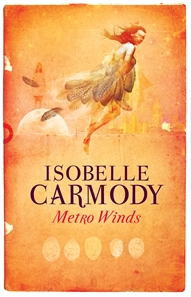
Metro Winds by Isobelle Carmody is a series of fairy tales for a YA or adult market (not for children), presented as short stories and one novella in one volume.  Most of these are original stories with one notable retelling of a classic tale, reimagined in the most creative way I’ve read to date.  It’s very difficult to talk about short stories without giving away spoilers so I recommend listening to Isobelle’s author talk and reading for more information: she presents Metro Winds beautifully, better than I, plus – added bonus – she explains why it’s been so hard for her to finish the Obernewtyn Chronicles.

I thoroughly enjoyed these tales even though I’m usually dissatisfied with the brevity of short stories.  My only reservation was one of the later stories with a male protagonist, which somewhat repulsed me, but others will rave about it.  Highly recommended.
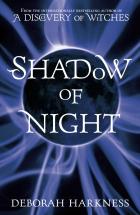
shadow of night cover

Shadow of Night by Deborah Harkness is the sequel to the best-selling Discovery of Witches.  Discovery is fantasy set in contemporary times with vampires, witches, daemons and all sorts of other supernatural folk.  Discovery ensnared me in the beginning with Diana Bishop, an academic, researching in the Bodlean Library in Oxford.

By the end of Discovery I had a few reservations due to what I felt was excessive introduction of magic: Diana’s house was sentient and had ghosts.  Although Diana was supposed to have grown up ignorant of the supernatural, she apparently had a relationship with this house knowing about its magical abilities and habitually magically disposed of her hair and nail clippings to prevent people finding her DNA.  Nonetheless, Discovery captured me and carried me through its romance and wild ride.

In Shadow the protagonists, Diana Bishop (a witch) and her husband Matthew Clairmont (a vampire) travel back in time to Elizabethan England so that Diana can find a mentor to teach her to control her budding powers.  Instead of staying focused, Diana and Matthew hare off after a missing text with the intention of securing it and taking it forward in time.  Although they’re intelligent people, Diana and Matthew ignored all the problems and potential paradoxes inherent in what they were doing.

I love time travel stories and I’m happy for them to engage with paradoxes or to circumnavigate paradoxes, so I’m very forgiving.  The problem with Shadow is the puppet master feel of so many events.  Mary, Diana’s new friend, shows up in the nick of time unexpectedly and does exactly the right thing without legitimate foreknowledge or a reasonable explanation afterwards. Phillipe, Matthew’s father, gives Diana a really hard time then suddenly does a backflip without justification for the contrasting behaviour.  I felt that Diana and Matthew lingered too long in historical Europe just to place them in a parade of historical events and European courts, winking at the reader all the while.

A year ago I would have read Shadow of Night, recognised some of its flaws and still loved it unashamedly.  This year I enjoyed it but that critical faculty switched on during reading made me almost feel guilty for enjoying it, puppet masters and all.

If you enjoy full on magical fantasy populated with a myriad of supernatural folk plus a generous dollop of historical fiction thrown in, and you’re happy not overly analysing the story, then Shadow of Night is a highly recommended read.  Just throw yourself in and enjoy the ride.
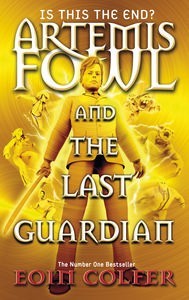
Artemis Fowl and the Last Guardian cover

Artemis Fowl and the Last Guardian by Eoin Colfer is the final in the comedy adventure Artemis Fowl series that my son grew up with, reading and rereading since primary school.  Of all the books my son read growing up, this series stands out as a series he still loves without reservation, aged 19.  I’ve read the full series as well, although not nearly as many times.

Artemis Fowl is a boy genius who grew up in a crime family.  After kidnapping a fairy, Captain Holly Short of Leprecon – the fairy police – the following adventures build an uneasy truce and later friendship between Artemis and the fae.  In this, the final instalment of the series, Artemis is on the cusp of adulthood.  As with Harry Potter, Artemis and his adventures have ‘grown up’ over the course of the series, aiming at a little higher age group, but I think the later books are still suitable for advanced primary school readers.  I think the entire Artemis Fowl series is suitable to be read to children too young to read themselves as stories like these will inspire a love of books.

Every Artemis Fowl book looks at current issues in the world, often from a a conservationist perspective without being preachy.  This final book explores the idea of obsolete conflict – like the Japanese soldiers stranded after World War II, still fighting the war because no-one told them it was over.  Eoin discusses this in our interview.  As always, Mulch Diggums (a very original dwarf) farts his way through adventures, slap-stick comedy routines abound like parts falling off zombie minions at inconvenient moments, camaraderie and high jinks abound.

I’ve enjoyed this series so much so that I recommend it to adults even if you don’t have children to whom you read.  If you read stories to children, this series is a must have.
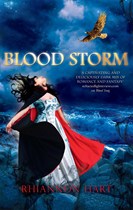
blood storm cover

Blood Storm by Rhiannon Hart is a YA paranormal romance starring Zeraphina, a princess whose older sister married the crown prince of another country, and Rodden, a commoner who rose to a position of power very young.  Both Zeraphina and Rodden have been infected with the blood of Lharmellians, the precursor to turning them into Harmings (human vampires).  As Zeraphina and Rodden struggle with side effects and struggle to remain human, retaining their will, they are intent on opposing Lharmellians and Harmings, whose politics may be more complex than they first appeared in Blood Song, the first in this trilogy.

In this, the second novel in the trilogy, Zeraphina and Rodden do a Cook’s tour of the countryside, learning more about each other and the Lharmellian conflict.  Blood Storm has an episodic feel as if written for TV and the different locations are the ‘location of the week’.  I particularly enjoyed the trip into the desert, which wasn’t just an excuse to feature belly dancing.  ;)

Zeraphina is pursued by a prince of another country to be his bride.  This courtship is my least favourite portion of the book as the prince is a bit of a caricature villain, missing only twirling black mustachios, but it’s a small portion of the story.

Revelations of Rodden’s past confirm that he’s not some mysterious prince in disguise, a somewhat time-worn trope.  Rhiannon has more revelations planned for book three, which she discusses, at least in part, when she talked to me just before Blood Storm‘s launch in August.

Blood Song is an original, captivating YA paranormal romance.  Blood Storm is not quite up to the same standard, but it’s still a solid second book for a new author.  I look forward to reading the conclusion.

whispers underground cover

Whispers Underground by Ben Aaronovitch is an urban fantasy comedy with Harry Potter-esque Peter Grant working as a policeman in contemporary London.  I started this review when I only had the flu, before it developed into full-blown pneumonia, but I didn’t quite manage to finish it.  Here goes:

Peter Grant works in The Folly, which is a special branch of London Metropolitan Police dealing with the supernatural in present-day London so everyone else can live in denial.  Lesley May, his cop-buddy and erst-while lust-interest, had her face ripped off in a previous novel.  Although Lesley is still intelligent, more capable than Peter and physically attractive apart from her lack of face, Peter has issues about Lesley’s looks.  Peter is shallow and somewhat slow on the uptake, as evidenced by Lesley overtaking Peter in magical studies as well as always having been the better police officer.    Although technically on medical leave, Lesley is actively involved in this novel to some extent.

Whispers Underground is a detective policing story told from Peter’s point of view; Peter is summoned to investigate a murder with a hint of magic.  Peter meanders around, furthering the investigation partly through luck, partly through his increasing skill and partly with the help of old friends.

Peter, like Aaronovitch, is a bit of a geek fanboi, so his detailed knowledge of architecture and the intricacies of London are woven into the story alongside countless one-liners spoofing geek culture with an emphasis on Lord of the Rings.  This is Big Bang Theory without making a mockery of the geeks, although a little more respect for Lesley – and, by default, for all women – would be appreciated.  At times Peter has the maturity of a teenager while at other times he’s considerate and thoughtful: I hope that this minor story thread is part of Peter growing up.

The humour ranges from dry one-liners to somewhat slap-stick physical comedy to intricate social comment like the reporting about Asylum seekers eating a snow plow (you have to read it!); thus Aaronovitch successfully casts a net for a wide audience.  I’m really enjoying this series.  Highly recommended as urban fantasy comedy adventure thriller.

I also expect romance to come later, when Peter gets his head out of that very dark place upon which he sits. :P  Although it’d probably have to be initiated by Lesley.

Hell: a movie review

Hell: a review by Elizabeth Vinton

Hell cover

Hell is the first movie that I have watched that has Roland Emmerich attached to it, since his ‘remake’ of Godzilla (for ‘Hell’, he is executive producer).

Those who are Emmerich fans, at least of his Hollywood films, I think may be pleasantly (or perhaps unpleasantly) surprised by the lack of epic scale to this film – it may be a deliberate move on his part to move away from larger scope films, but remain supportive of the ‘(post)apocalyptic’ theme he seems to be fascinated by.

Those who may be put off from Hell due to concerns over Emmerich’s involvement should give the film a try as it is far from his style – I get the impression that like Del Toro and many other directors, he has supported an upcoming director’s (Tim Fehlbaum) project. His name is definitely touted on many of the advertisements for the film, I would say in an effort to mass promote it internationally – especially as it’s a German film, in German.

The premise is simple – it is 2016, and Earth’s surface has become inhabitable due to increased temperatures, exposure during the day causes very serious burns within hours, the light from the sun blinding. Even the night is brighter but allows safer travel for those looking for food and water.

We follow three people, two sisters and a man they have befriended along the way, as they follow the hope that a bird in the sky brings them of water, of a place where they can have some sort of life.

The shots of the bleak (and yet in some scenes, beautiful) landscapes, and of the sparse existence they have made in a car, thickly papered to keep the deadly sun out, is very evocative. The world they survive in, whilst not explained in any great detail, is told in the images shown to the viewer rather than any form of narrative.

The difference between dusty abandoned interiors, decaying signs of an old way of life and the white purity of the extreme daylight hours depicts the harsh and vulnerable nature of the character’s position. The fields filled with dead cattle and the forests of ghost like trees, stripped of foliage are horrifying to behold.

This film is visually stunning, the cinematography especially in scenes going from dark to light is amazing to watch. As the viewer you are sometimes also put at a disadvantage in regards to sight adding to the tension via excellent visual effects.

Sadly however the tale told within this amazing landscape is not very original, not very complex and there is not a lot of character development.

I found myself only liking one character the entire movie, Tom, whom the threesome find in an abandoned gas station and take with them on their journey. He carries scars that hint of interesting stories not told, and has a very good survival instinct that comes from experience. But we find out very little about him and his past.

In fact overall we come into the middle of a story in terms of the three main characters – which I felt was to the detriment of the plot. In all the time the viewer spends with them the entirety of the film, I really don’t think anyone, despite the terrible nature of events that happen, develop any further than how they first appear. They seem ‘untouched’ by what they go through.

The ‘bad guys’ of the film, also are fairly bland, and the scenes with them take the movie from a post apocalyptic thriller into the realm of predictable slasher horror.

The film goes from slow burn, full of tension, to out and out action, but in the end the tale is short, and very simple. I found this to be a shame as the world created to tell this story in was visually set up extremely well and had so much promise in it.

All in all, if you are looking for a film that contains a simple story told within a wonderful visual medium, and you are happy for it to go from apocalyptic thriller to horror action, you will enjoy this.

I found it had potential that was not realised within such a short, simple plot, but would be interested to see what the director does next as he has a great visual eye.

Nightfall: a horror review by Liz Vinton

nightfall cover

REVIEW OF NIGHTFALL

by Elizabeth Vinton

It must be said that I have read Nightfall with some anticipation after having heard of it’s interesting premise and the high praise for Will Elliott’s first novel The Pilo Family Circus (which I have not yet read, but certainly plan to).

Nightfall is a strange novel. Good strange. Comparable, I believe, to Clive Barker’s style of fantastical horror (think Books of Blood) – not as intimidatingly dark, but with similar bizarre elements, characters, landscapes and events.

It dances between light fantasy and grotesque horror, the novel’s actual governing genre very hard to pin down. Dark Fantasy may in the end be the best description, but that can mislead those who have difficulty reading stories that contain horror elements, especially if they are graphic in nature.

And the horror can be very intense and stomach churning when it does appear.

The protagonist of the novel, Aden Keenan, begins his journey by becoming aware of the fact that he is dead by his own hand, and is lying quite uncomfortably in a bathtub in an unfamiliar house. This realisation whilst being a matter of a very grim nature, has moments of touching comedy, spiralling into a comical, and gruesome encounter with the first citizens of the odd world he has entered.

Despite not knowing very much about Aden, especially his past ‘live’ self , you find yourself liking him, and in fact quite a few of the darker characters are endearing in their own way also.

The world that opens up before Aden is epic in scale, and stunning in its description. Various buildings and landscapes are characters in their own right, greatly adding to the atmosphere.

The video gamer in me did find her-self early on picturing the story in game format, a desire developing to wander around the towns and peek in the windows of the houses not explored by Aden.

The plot of the story launches into something both painful and beautiful, and for some people, very personal too. I did not find the resolution all that surprising, but some may and so I am reluctant to elaborate on Aden’s discoveries about himself and the world his death led him to. It is important that the reader travels along with Aden for the story to be fully felt – and I mean felt.

I can say that amongst the comic book style bad guys, good guys and amoral guys there is intense pathos, which left me wondering about the author and experiences he or someone close to him have had. This story felt in the end like a cathartic purge, maybe it wasn’t intended as such.

I think one of the highest compliments you can pay a story is wanting more of it – more of the world, learning more of its history, of the main players in its development, of the towns and townsfolk.

The novel felt almost like a reasonably complex index of places, people and events of a much larger story, well beyond Aden’s experiences. I found some of the details on aspects of the story a bit sparse for my liking. Considering what takes place due to his existence, perhaps this is styled deliberately and any more detail would detract from ultimately what the story is about.

In the end it was a strange but enjoyable experience to read.  I believe readers who try it will find this too, as long as you are prepared to go along with a novel that swaps genres (sometimes from chapter to chapter, an aspect I really loved), and don’t mind finding many questions left very much unanswered.

Each reader will be left haunted by a different aspect of it.

Nightfall is an imaginative and moving novel. Although I felt it was missing some further descriptions/information that would help the reader immerse more fully into the world, it definitely grows on you over time once you have read it, and I can see myself re-reading it in the future to explore elements of the story further.

Judging a book by its cover

There’s an old saying: ‘Don’t judge a book by its cover.’  This can be taken figuratively applied to non-book situations, like when you glance at a person and judge them from first appearances.  In the more literal sense, however, it’s about looking at a cover and judging the words between on the cover alone; fundamentally, it’s a decision to read or not to read based on a picture by an artist who, most likely, has nothing to do with the author and probably hasn’t even read the book.

I am guilty.  Yep, I put my hand up to this most heinous of sins: judging a book by its cover.  I’ve made decisions on what to read and what to delegate to others based primarily on covers.  Some books, whether for good or ill, have been placed on the very pinnacle of my TBR pile because of their covers or even their pre-release never-to-be-released-to-the-public non-covers.  In one particular case the cover definitely influenced my attitude to reading the book, the lightness and speed and level of enjoyment; the suck fairy visited upon a second reading – taking a book that I’d raved about and rated at 5 stars down to 3 stars (not too bad, really).

Whether I receive something in ebook or paper also impacts on the timing of reading.  Additionally, if I receive a mass market paperback, I’m much less likely to read it although, in my defence, that’s usually because the print size is too small (vision impaired, remember!)

What choices have I made?

Pure cover

Pure by Julianna Baggott piqued my curiousity, firstly because it is SF and secondly because of the name coupled with a jet black cover.  This image doesn’t do the cover justice: the cover of my copy has the text the same colour black as the cover, but the text is raised and glossy with a matt black background.  This courageous and apparently contradictory cover – white is symbolic of purity in our culture – got my attention.  The novel itself is more awesome than the cover: in my opinion it’s a must read and stands up there with Brave New World as a potential literature classic.

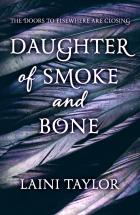
Daughter of Smoke and Bone cover

Daughter of Smoke and Bone came with a non-release cover and a large yellow feather.  I think the release cover is much more attractive with its dark background and metallic feathers in shades of blue and lavender, but the feather got my attention.

daughter of smoke and bone cover

The blurb that accompanied the book talked about how the publisher sent someone a huge distance with a collection of feathers to court and buy Laini Taylor’s novel; this story was intriguing.  I must admit I fell in love with it in the first chapter, when a vampire leapt out on tourists in Prague and….  I won’t spoil it, but it won me over.  Laini’s prose was poetic, inspiring in me a strong desire to visit Prague, a city that, previously, I’d not felt any particular urgency to visit.  I was concerned that the story would be your average YA paranormal romance but it just wasn’t.  I loved it, but I might have missed out if it hadn’t been for the marketing.

rivers of london cover

The Rivers of London cover stood out upon arrival because it was different, not following the current fashions for fantasy stories.  The blurb also lead me to believe – correctly – that it’s an urban fantasy with humour.  I don’t read enough humorous books, so it went to the top or near the top of my TBR pile.  I really enjoyed reading it and the next two in this series.

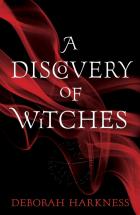
discovery of witches cover

Discovery of Witches arrived as an uncorrected proof with a cover that was later embellished to become the release cover (release cover pictured), wrapped in coarse brown paper hand-stamped with the mark of the vampire’s family.  I kept the paper, carefully folding it and putting it ‘somewhere safe’ so now I can’t find it without a huge hunt.

I don’t know what it is about brown paper – especially coarse brown paper – but I find it really appealing.  It’s tactile.  The wrapping enhances rather than detracts from the book inside.  Tied with string makes it complete and, I think, is romantic without implying that the contents are romantic.

Equations of Life cover

Equations of Life pre-release cover

Equations of Life cover

Equations of Life pre-release back cover

I received Equations of Life (front and rear covers pictured above) and I loved it.  Initially it was the ‘Mind the Gap’ on the front cover that did it, in the same font as the same message written on Metro train platforms.  The blurb on the back cover sold me completely.  When I read Equations of Life, I was heavily influenced by the cover and my desire for some comedy and SF.  The spoofs in the first novel charmed me: references to Doctor Who, zombies etc, kept me entertained.

While I enjoyed all the books in the trilogy, I could see ‘fanfic’ qualities increasingly creeping in over the course of the trilogy.  To give Simon Morden (the author) credit, the protagonist doesn’t have sex with anyone other than his wife but every woman who came into contact with Petrovich, the protagonist, seemed to be in love with him in spite of his complete lack of charisma, his anti-social tendencies and his lack of respect for those around him leading to secrecy and unilateral action instead of team work.

On a second reading of Equations of Life I was much more aware of cringe-worthy aspects of writing, such as love at first sight between Maddy, a nun, and Petrovich leading to Maddy forsaking everything immediately to follow Petrovich and protect him.  Not to mention the dialogue in the early scenes between the two of them – ouch!  Maddy was a lethal killing machine trained to defend her superiors, but she couldn’t drive a car?!  And Petrovich ‘taught’ her? In a manual car in extreme circumstances, all the while talking down to her without equivalent retaliation or smack downs?  Equations of Life is probably a 3 star book, even after a second read through, but my first reading was influenced heavily by the cover, my desire for both comedy and science fiction.

I’m pretty sure I was given the opportunity to review Ash and Huntress by Malinda Lo.  I passed them over because of the covers: they looked like a lot of other YA fantasy covers.  I assumed – incorrectly – that these books would have been similar to a lot of other YA.

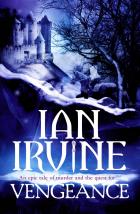
Vengeance cover

Vengeance also arrived wrapped in paper, tied with string and with a personal note from Ian himself.  Again, I put this carefully in a ‘safe place’ and now I’m going to have to hunt through all my safe places to find it.

to spin a darker stair cover

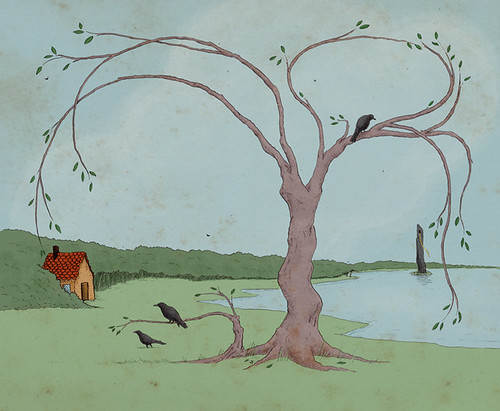
To Spin a Darker Stair cover

To Spin a Darker Stair arrived gift-wrapped in an envelope.  Because the envelope was intended for letters not books, and the wrapping paper was typical gift-wrapping paper, the envelope and paper were torn and the book cover dented.  Presenting this book as a surprise gift worked in that it created curiousity – I wasn’t expecting this book at all – but the book arriving damaged was a little disappointing.

At the end of the day receiving an unknown book from an unexpected source may not have worked in the book’s favour except for a few other factors.  The book design was excellent.  I liked the artwork: a whimsical pseudo-watercolour image (pictured above).  The print size was good: this was very significant as it seems that most Australian short stories are printed in font sizes so minuscule I struggle to read them with a magnifying glass (so I don’t read them).  People I knew on Twitter were talking about receiving their copies as well; without this, the total absence of a cover letter or accompanying card may well have backfired.  The book was tiny, so I read it very quickly that evening and I enjoyed it.

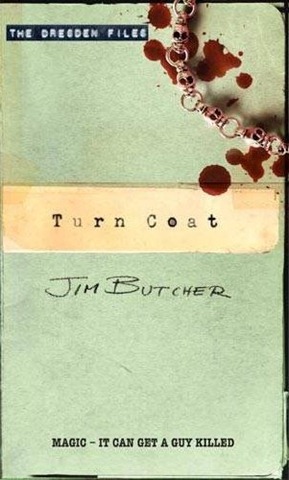
turn coat cover

I first learnt of the Dresden Files at the Melbourne Science Fiction Club, when they scheduled a night of Dresden Files the TV series.  I purchased the TV series and watched the entire short series, then I went into Dymocks and started purchasing the books.  At that stage, the books were presented with matt covers styled like old-fashioned manilla files with slightly scrap-book-ish touches.  As Harry Dresden, the protagonist, is a wizard who fries electronic equipment with his magic, these covers imbued the paperback novels with an ambience lacking in the more recent covers that have followed the latest fashions in book covers (see below).

turn coat cover

Another issue I have with changing the covers part way through a series is it detrimentally impacts on the presentation of the set on my bookshelf; I have a variety of book covers in this series, it doesn’t look like a set at all.

I admit I’m shallow: I judge a book by its cover and its presentation.  It’s not the only factor in my decision to read a book or its order in my TBR pile: research for interviews, previous writing history, personal recommendations and my mood at the time of book selection all factor in as well.  Books that look ordinary, like every other fantasy book on the shelves or like CGI SF games, are less likely to attract me than creativity in presentation.  Instead of following fashion, I recommend that publishers look at current fashions and do something different.

UPDATE:  On twitter, John Birmingham said: Help design my book cover for the UK release of Without Warning. Win yourself The Disappearance Trilogy audiobooks http://www.cheeseburgergothic.com/archives/3703

without warning cover

This is the Australian cover.  Any thoughts? The advertised price sticker is attractive and the 50 books you can’t put down sticker doesn’t get slapped on everything, but the cover doesn’t really grab me apart from that.  I really enjoyed Birmo’s World War 2.0 trilogy, so I’m interested in principle, the cover doesn’t need to grab me.  Thoughts?

Charlaine Harris

Charlaine Harris

Months ago I heard Charlaine Harris was heading to Australia for a book tour and convention.  As soon as I heard this, I contacted the lovely people at Hachette, asking if I could please have an interview.  I was referred to Hub Productions for an interview: it seems there are technical contracty-type things that happen when people are flown over for these conventions.

Hub Productions’ publicist asked me to email her some interview questions to which she sent me a reply from her iPhone on Friday afternoon, in between Charlaine’s many other commitments.  This is why Charlaine’s interview is so brief and isn’t available in audio.

Late last week I received an email from Jaki, a manager at Hachette Australia, Charlaine’s publisher.  This email was titled ‘Top Secret’ and included an invitation to a breakfast with Charlaine Harris this morning.  I wasn’t allowed to tell anyone about it until today.  You can imagine how hard that was!  Hubby knew, but I kept my lips zipped and refrained from even dropping hints about what was happening.

A small group of people gathered in the foyer of the Hotel Lindrum where we were welcomed in to the back bar by a senior manager from Hachette Australia (I think her name was Mary but I don’t have a great memory for names).  I also met Jaki Arthur, one of Hachette’s publicity managers, and another staff member whose name escapes me.  (Business cards are really good for situations like this: I can ‘remember’ names!  Gah!)

The back bar was a cosy room off the foyer with a bar full of essential coffee and tea making facilities, yummy pastries, a welcoming fire – probably gas but the flames looked real – and displays of Charlaine’s books.

It seemed most attendees were from Melbourne bookshops: places like Readers Feast, Dymocks, Mary Martins, Readings and Slow Glass Books.  Amanda Wrangles, author of books and Marianne de Pierres’ websites’ contributor, was also very visible although I managed to photograph her hair more often than her face.  A few faces were vaguely familiar but I’m not good with faces (funny that!).  Everyone was friendly.  It seemed that there was a pause in the beginning while people took a breath and looked around.  Then everyone worked the room, talking Charlaine Harris, True Blood and books in general.

Not long after I’d managed to finish my first coffee or two, Charlaine Harris arrived.  Charlaine was very personable, pro-actively working to put people at ease.  I chatted briefly with Charlaine before she did the rounds of the entire room, talking to everyone individually.  Charlaine strikes me as being a successful person with her feet on the ground; she hasn’t lost touch with the ‘average’ person.

While Charlaine did the rounds, Hachette staff gave out copies of Deadlocked, the latest and second-last instalment of the Sookie Stackhouse series, writing our names on post-its so Charlaine could be sure to spell them correctly.  I took my review copies with me to be signed and wasn’t sure of the protocol, so I asked if Charlaine would mind signing my review books to me and the new book for a competition winner.  She was very obliging.  Charlaine chatted with people while she autographed books, and then posed for photos with many fans.

Inevitably the conversation came around to Hachette’s display of Charlaine’s True Blood/Sookie Stackhouse series.  A number of people commented on how pretty the series looks and how it makes a nice display on a bookshelf, something too often overlooked in book design.  I love the artefact and collecting matching sets.  Spines that stand together like this are a bonus, although I wouldn’t want too many sets exactly like this.  Apparently the story behind this book design is that Hachette were re-releasing the series, the artwork from the TV series wasn’t available in time, so this is the end result.

Sookie Stackhouse series

I finished reading Deadlocked on the weekend, just in time to meet Charlaine.  Deadlocked is the second-last in the Sookie Stackhouse series:  Charlaine is starting to wrap up many of her characters’ story lines in preparation for the final book.  While many fans may be disappointed that the series is ending, I’m a firm believer in leaving fans wanting more.  Furthermore, the foreshadowing in Deadlocked leads me to expect a good finish to the series.  Grab this now: get your chocolate-equivalent fix (blood-equivalent?) in preparation for the grand finale.

NOTE: None of my Charlaine Harris posts – nor any other posts – are sponsored.  

Return to home page

The Return Man: a review

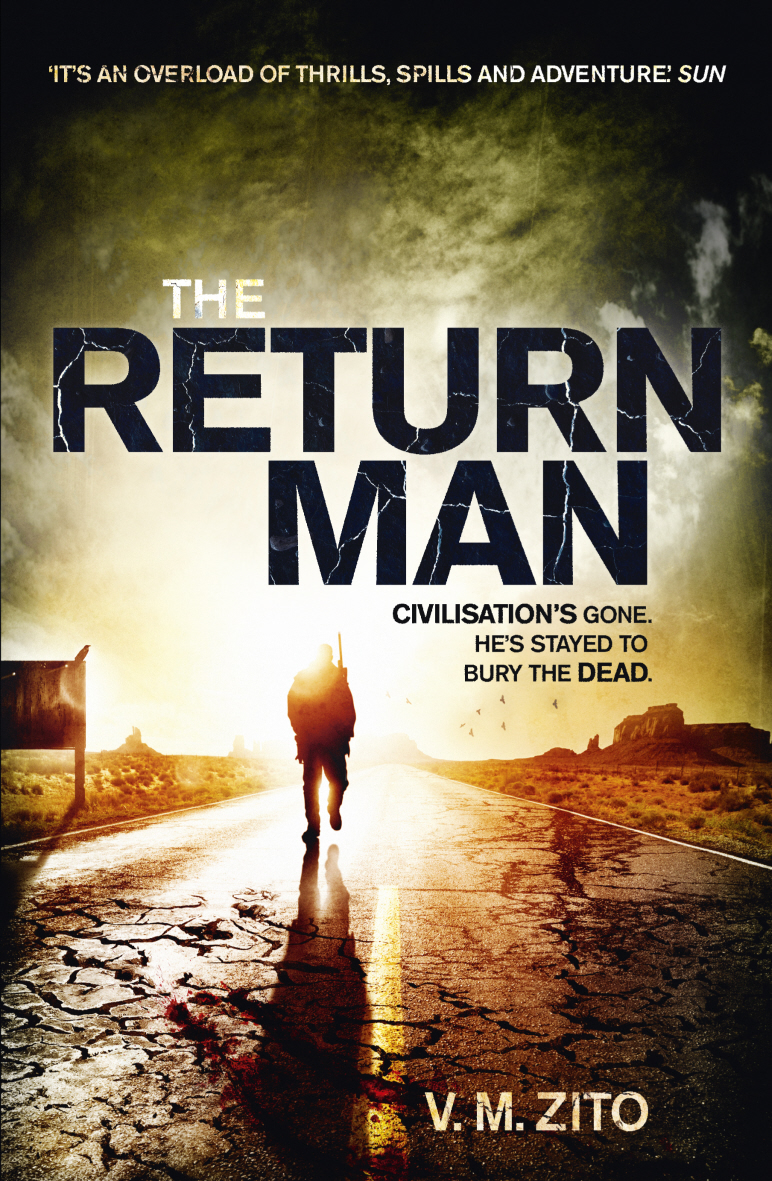
return man cover

AUTHOR: V.M. Zito
PUBLISHER: Orbit
REVIEWER: Jade Hounsell

The USA has been divided into two; the East has become a safe haven from the West, which is now a wasteland filled with the resurrected dead and called by the survivors, the Evacuated States.

Henry Marco is a former neurologist and by choice has chosen to live the last four years, since the outbreak, in the Evacuated States. He had his reasons for staying during the evacuation; he found his wife’s crashed, blood-soaked car at the start of the outbreak and all he wants to do is find and return her.

Marco makes a ‘living’ by being the ‘Return Man’, which entails Marco’s brother-in-law, who lives in the East, finding grieving relatives and then Marco hunting them down and makes them permanently dead, or as he puts it, Returned.

Marco has just gotten back from a job when he is contacted by Homeland Security (yep they are still kicking along) whom have taken Marco’s brother-in-law hostage as leverage till he accepts a job from them. They want Marco to hunt down scientist Roger Ballard, (whom may have found the cure for the Resurrection disease and have it in his DNA), get a blood sample and return him.

Sounds simple enough, however the US Government isn’t the only one after Ballard and the starting point is California, where the apocalypse began. This job is going to test Marco like he has never been tested before, not only does he have to find his man with a team of soldiers (remember he has been by himself for 4 years), but he also has to deal with a spy and a group of radicals called the Horsemen whom want to find Ballard and sell the cure to the highest bidder. Will Marco succeed when the odds are really not in his favour? (Sorry, cross reference, just read the Hunger Games….)

Now I really have just given you the bare bones of what this book is about, I suppose you could say it is the core of the main plot but there are just so many little twists and turns along the way that it would take me ages (or pages) to list them all. I think that by telling you everything that happens would also take away all of the excitement of actually reading this book and, let me say, I really, really recommend that you read it. I powered through this book in two days as I couldn’t put it down, just wanting, no needing is a better way of saying it, to know what was going to happen next.

There is political drama, a bit of a love story, action aplenty, spies, some medical stuff and, best of all, zombies aplenty. So, in my mind at least, there really is something for just about anyone and everyone. Oh and there is a nice interview with the author at the back of the book giving a bit of insight as well.

Adventure Time season 1: review

Reviewed by Daniel Haynes

Adventure time is a cartoon series which airs on Cartoon Network. The episodes are roughly 10 minutes long, and each episode feels like a rollercoaster ride, as the show and plot never stays still.

The show is set in a post apocalyptic future (indicated by various scenes throughout the show) and follows a human child called Finn, and his dog Jake throughout their exploits and adventures in the world.

While the show is run on a child-friendly network and doesn’t contain obscenities or graphic violence, Adventure Time has some of the finest multi-levelled, universal humour I have ever come across. Double entendre’s, hidden meanings, phrasing, irony and complete obvious speech are all worked together in fast paced scripts that really work. The dialogue is witty and the situations/conflicts in the episodes are completely tongue-in-cheek.

Although the animation is at times clunky or flat (compared with later seasons which improve considerably), it works well to convey the story. The artists have created an amazing world with fresh environments for almost every episode, and the characters are distinct and vibrant.

The voice acting is phenomenal, which is to be expected when you have the likes of Joe DiMaggio and other equally talented individuals lending their voice to unique characters.

The show has become a hit phenomenon worldwide with a constantly growing fanbase and viewership worldwide of all ages, thoroughly recommended!

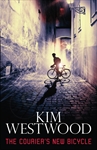
The Courier’s New Bicycle: a review

Author: Kim Westwood
Publisher:  HarperVoyager
Reviewer:  Nalini Haynes

courier's new bicycle cover

In Melbourne in the near future the right wing has taken power, followed by state-sanctioned religion promoting discrimination and even attacks on non-conformists.  During a lethal influenza epidemic, inoculations were diluted with a drug later found to cause sterility.  The Courier’s New Bicycle is set about 8 or 10 years later when the ramifications have begun to be felt, rippling into the political sphere, but before infertility escalates to Children of Men proportions.  This situation would not be as severe as in Children of Men as some women are still fertile, but pregnant women aren’t sacred in this society and babies aren’t being bought from overseas at astronomical costs – yet.

Salisbury Forth – called Sal by her friends – is androgynous and same-sex attracted although probably bi-sexual.  Born female, Sal’s experience growing up is one of ambivalence to gender stereotypes, not fitting with traditional roles.  Sal works as a courier for a stuffed toy company whose special clients have extra-special stuffing in their toys: instead of drugs to get you high, they have drugs to increase the likelihood of fertility.  Someone starts trading tainted hormones under Sal’s boss’s label, so Sal is roped in to investigate.

The Courier’s New Bicycle is part Friends and part accidental detective story, but what sets it above most other novels is the nature of the world-building and unusual characters.  Westwood has taken the politics of right-wing ‘First’ parties and mixed in the religious politics of the US and the Mad Monk.  Not satisfied with that potent blend, Westwood adds the politics of non-traditional sexuality; In this brave new world, the pendulum has swung back to traditional 50s-style stereotypes and gender ideals; curvaceous women and muscular, lantern-jawed men.  To be different is to be ostracised at best, or targeted for physical violence and worse.  As Sal and her non-traditional friends need to fly under the radar to survive, the drugs and Sal’s investigation puts them at greater risk.    Westwood takes current attitudes and extrapolates from currently informally segregated waterholes into prohibition-style speakeasy joints for the differently-oriented.  In one scene Sal and her girlfriend go out on a date, ‘passing’ as normal, just as half-castes or disabled persons talk about ‘passing’.  Incredibly powerful, this plot thread takes this novel into a class of its own while raising the stakes to add to the suspense.

The Courier’s New Bicycle is a masterpiece; I haven’t felt this way about a work since Wings of Desire.  Highly recommended; this is brilliant speculative fiction not to be missed.

There are a few explicit sex scenes in the novel however they are fairly brief.

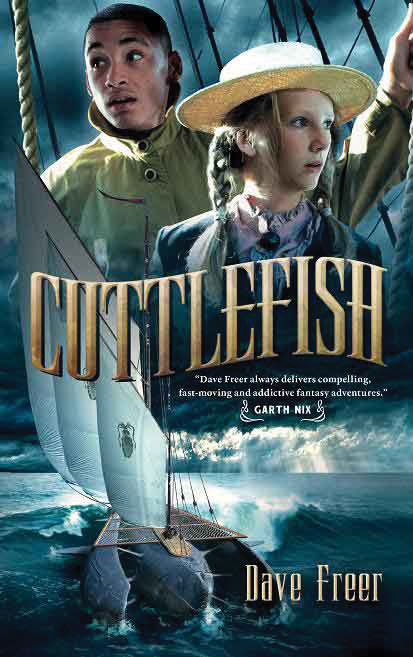
Cuttlefish: a review

Author:  Dave Freer
Publisher:  PYR
Reviewer:  Nalini Haynes

Cuttlefish cover

Cuttlefish is a speculative fiction YA book set in a not-too-distant past alternate history where rising sea levels have flooded London, converting that city into a new Venice.  Clara Calland, a teenager at boarding school, absconds with her mother who is being hunted by government and anti-government groups.  Tim, a teenage boy from the impoverished tunnels of London, has signed on to the Cuttlefish as crew.  The Cuttlefish is a submarine with catamaran capabilities that alternately runs on coal, electricity or wind power, depending on the circumstances.  Fully crewed, the submarine has a traitor on board.  No-one listens to Clara or Tim, so they investigate on their own with dire consequences.

Dave Freer has built an intricate alternate-history world with steampunk themes.  The British Empire remains strong in spite of excessive use of coal leading to premature rising of sea levels; world politics and geography varying accordingly.  The detail that goes into Freer’s descriptions of running Cuttlefish, including converting the submarine to sail power and hydro-foils, is incredible.  Likewise, the detailed world-building is immersive; Freer has translated authentic history into this alternate world with a differing political agenda.

The plot has four main threads: 1) a very chaste romance between Clara and Tim, young love at its most naïve and endearing, 2) Clara’s discovery of world politics including her parents’ roles in a rebellion, 3) a chase scenario where the various groups are hunting Clara’s mother hunt down in Cuttlefish and 4) the traitor on board, his actions and consequences.  I’d prefer a little less focus on the actual sailing and hiding.  I felt it was hard to maintain my suspense in some sequences, but then I’m one of those heretics who found 20,000 Leagues Under the Sea deathly dull: perhaps I just have a very short attention span.  The other plot threads are engaging, the characters are interesting and they develop throughout the novel as do their relationships.  I can easily visualise Cuttlefish as a beautiful colour graphic novel or even a Hunt for Red October-style movie.

Cuttlefish is a kind of coming-of-age story in that Clara and Tim are both in the process of growing up and re-evaluating their places in the world.  So many stories of this genre use generation disconnect tropes and seem to leave you with the feel of ‘it’s over, they’ve grown up’ at the end, which is very superficial.  Freer explores themes of generational disconnect and relationships by balancing possible rebellion against the necessity of relationships, alongside the knowledge that the teenagers don’t have all the answers.  Clara and Tim’s relationship and coming of age is a story of transition with a hope for the future but it’s not an end in itself.  It’s not clear whether Freer intends to write more in this series; the open ending leaves room for more, or for the reader to imagine their own future.

Billed as a YA novel for ages 12 and up, I recommend Cuttlefish for primary students with an appropriate reading age as well.  Cuttlefish  is recommended for fans of YA spec fic, sailing, steampunk and alternate history, for older children, teens and the young at heart.

Trouble Twisters The Monster: a review

Trouble Twisters: The Monster
Authors: Garth Nix and Sean Williams
Publisher: Egmont
Reviewer: Nalini Haynes

Trouble twisters 2 cover

Jack and Jaide are non-identical twins living in the small town of Portland, which has its very own monster. Jack and Jaide are troubletwisters, teenagers growing into their supernatural powers, eventually destined to become wardens whose role is to protect others. Tara, the other new kid in school, becomes their friend while the twins use their amateur sleuthing skills to prove that Tara’s father is Evil incarnate that must be destroyed. Just as teenagers have difficulties with hormones, these teenagers have difficulty controlling their powers. Their powers run amok, the only solution being for them to know themselves, accepting their strengths and weaknesses.

Grandma X, the twins’ caregiver and mentor, has two cats who talk to the twins when the cats aren’t miffed. Jaide and Jack’s mum works three-day shifts at the hospital and has been enchanted, giving the twins freedom to move in this paranormal world while they learn to use their powers, find out what is meant by one twin always falling, and combat the Evil that is trying to gain entrance into their world. Instead of the adults being removed from the picture – a common mechanism to enable minors the freedom to have adventures – the twins must balance their relationships with the adults in their lives.

In the first Trouble Twisters book, Jack and Jaide discovered their abilities and had adventures that resulted in blowing up their home. They and their mother moved to Portland to live with Grandma X, only to discover that one of the wards in Portland was in need of repair. They managed to repair the ward and started attending a new school. At the beginning of book two they’ve been at the new school for a week when another new kid, Tara, told the kids at school she may have seen a monster.

Trouble Twisters is a well-written paranormal urban fantasy with two great advantages over a lot of similar literature. Firstly, the teens are cared for by adults in their lives with whom they may have disagreements – both sides being in the wrong at various times – but with whom they continue to have relationships. This is much more constructive and interesting than the Harry Potter-esque Muggle trope where Harry’s family don’t understand him because they’re mundane and abusive. In contrast, the shades of grey in Trouble Twisters lead the reader on, deepening the mystery and expanding possibilities in this and future instalments in the series.

Secondly, this is a novel written by two men, starring a male protagonist who is equal to his female counterpart and cared for by a Granny Weatherwax-type. Thus this is a rare series that can appeal to both boys and girls equally. I think Williams and Nix have carried this off successfully, even with the introduction of a third youth who is female. The dynamics of the three-way relationship – the twins’ bond, the girls’ friendship, the potential love-interest in its sweetest infancy – are believable and engaging. Trouble Twisters has the potential to build bridges, helping the young develop healthier attitudes towards representations of gender while avoiding harmful stereotypes. More of this, please.

Trouble Twisters: The Monster is a paranormal urban fantasy. I suspect it’s aimed at the younger end of the YA market, but it’s an excellent read for younger children with sufficient reading skills. Highly recommended for children, teens and the young at heart.